




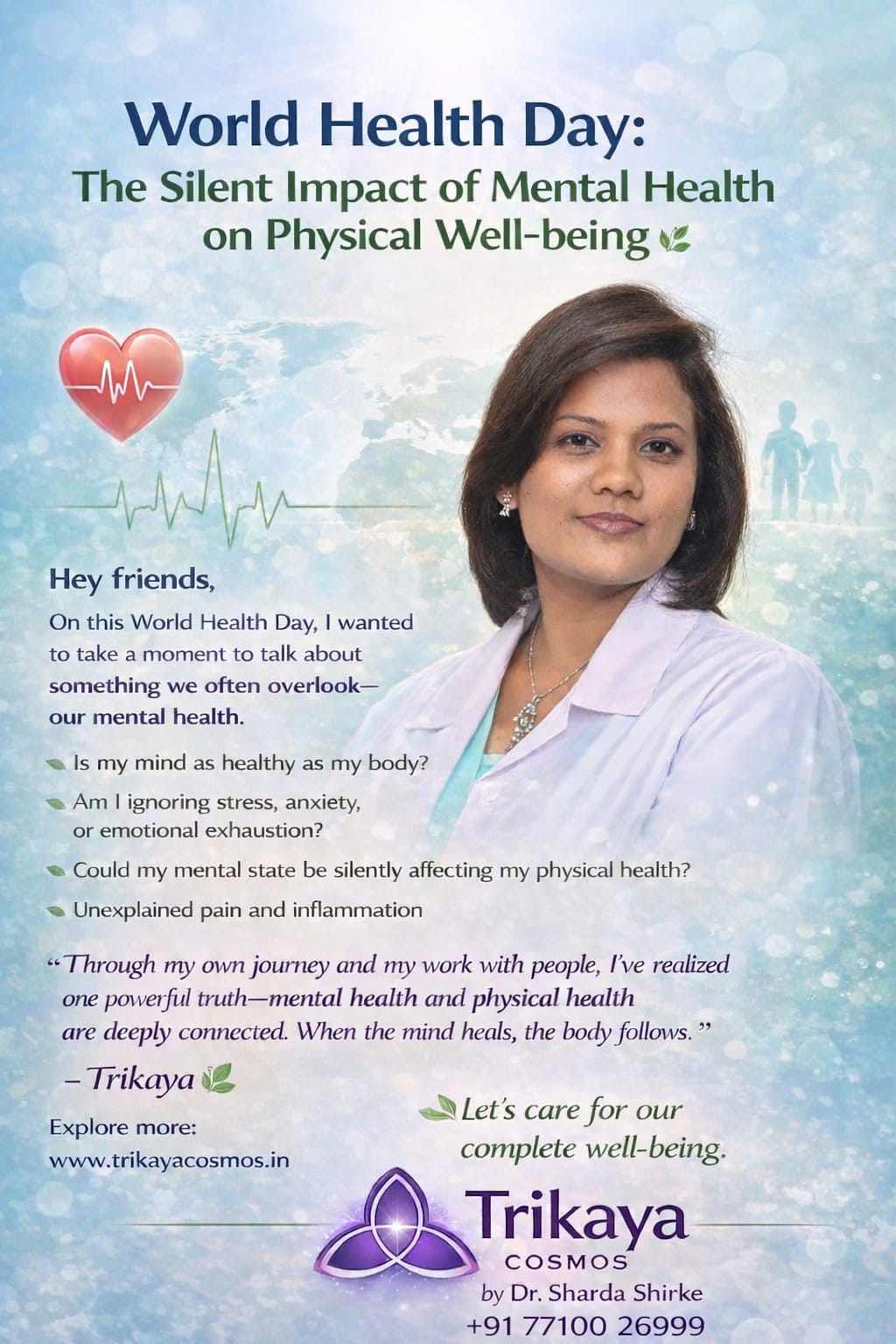
World Health Day The Silent Impact of Mental and Spiritual Health on Physical Well-being
On this World Health Day (7th April 2026), I want to pause and reflect on an often overlooked aspect of our health our mental and spiritual well-being.
In today’s fast-paced world, we are constantly encouraged to maintain physical fitness—eat right, exercise regularly, and schedule routine medical check-ups. While these habits are essential, they only address one part of our overall health.
A deeper question remains:
Are we truly taking care of our minds and inner selves?
The Invisible Connection
Mental, spiritual, and physical health are not separate entities—they are deeply interconnected.
When the mind is burdened with stress, anxiety, or emotional fatigue, the body eventually reflects it. Scientific research and real-life experiences both confirm that prolonged mental distress can:
- Weaken the immune system
- Increase the risk of heart disease and diabetes
- Lead to insomnia and chronic fatigue
- Cause unexplained aches, inflammation, and low energy
Have you ever felt tired despite adequate rest? Or experienced discomfort without a clear medical diagnosis? These could be signs of inner imbalance seeking attention.
The Vicious Cycle
Poor mental and spiritual health often leads to unhealthy lifestyle patterns:
- Lack of motivation to exercise
- Poor dietary habits
- Avoidance of medical care
- Difficulty maintaining routines
Over time, this creates a cycle where mental distress affects physical health, and physical challenges further deepen emotional struggles.
Why This Happens
Several factors contribute to this connection:
- Biological Factors: Shared genetic vulnerabilities
- Behavioral Factors: Reduced self-care during emotional distress
- Cognitive Challenges: Difficulty in decision-making or planning
- Lack of Support: Emotional struggles often go unnoticed or unsupported
This makes mental and spiritual well-being a silent driver of overall health.
The Positive Side of Healing
The good news is that the reverse is equally powerful.
A balanced mind and aligned inner state can:
- Strengthen immunity
- Improve energy levels
- Enhance emotional resilience
- Reduce the risk of major illnesses
When your mind is calm and your spirit is grounded, your body naturally moves toward healing.
Real-Life Case Insight - When the Body Speaks What the Mind Holds
A 42-year-old working professional came seeking help for persistent fatigue, body aches, and disturbed sleep. Despite multiple medical consultations and normal diagnostic reports, her symptoms continued to worsen.
On deeper interaction, it became evident that she had been dealing with prolonged emotional stress—balancing work pressure, family responsibilities, and unprocessed personal grief. She had normalized her stress over time, assuming it was just a part of life.
However, her body was telling a different story.
Through a holistic approach involving guided awareness, emotional release techniques, and simple mindfulness practices, she gradually began reconnecting with herself. As she started addressing her inner emotional state, subtle but consistent changes followed:
- Her sleep improved
- Energy levels increased
- Body pain reduced significantly
- She felt calmer, more in control, and mentally clearer
What medical reports couldn’t fully explain, her inner healing revealed.
This case highlights a powerful truth—
when emotional and spiritual imbalances are acknowledged and addressed, the body begins to heal naturally.
A Moment of Awareness
This World Health Day, take a pause.
Ask yourself honestly:
“How am I really doing—mentally, emotionally, and spiritually?”
Not the automatic “I’m fine,” but a genuine check-in.
Because awareness is the first step toward transformation.
Simple Steps Toward Holistic Well-being
Even small changes can create meaningful impact:
- Practice stillness: Meditation, mindfulness, or quiet reflection
- Prioritize sleep: Essential for mental and physical recovery
- Eat mindfully: Nutrition affects both mood and body
- Stay connected: Supportive relationships promote healing
- Seek help: Asking for support is a sign of strength
A Holistic Approach to Healing
At Trikaya Cosmos, the focus goes beyond symptom management. The aim is to nurture complete well-being—mind, body, and energy.
My intention has always been to help individuals reconnect with themselves, understand their inner balance, and create a healthier, more aligned life—mentally, physically, and spiritually.
Through a holistic approach, I aim to support people in:
- Managing stress and emotional challenges
- Building clarity and inner peace
- Reconnecting with spiritual balance
- Strengthening overall health naturally
Because true healing happens when the whole self is cared for—not just one part.
Closing Thought
As we celebrate World Health Day, let us redefine health.
Let us move beyond the physical and embrace a more complete understanding—one that includes our thoughts, emotions, and inner balance.
Because when the mind and spirit heal, the body follows.
FAQs Section
1. Why is mental health important for physical health?
Mental health directly impacts physical health. Chronic stress and emotional distress can weaken immunity, increase inflammation, and raise the risk of diseases like heart disease and diabetes.
2. How does stress affect the body?
Stress triggers hormonal changes that can lead to high blood pressure, poor sleep, fatigue, digestive issues, and reduced immunity.
3. What is the role of spiritual well-being in health?
Spiritual well-being promotes inner peace, emotional balance, and resilience, which positively influence physical health and overall quality of life.
4. What are signs of poor mental and spiritual health?
Common signs include constant fatigue, anxiety, lack of motivation, sleep disturbances, emotional overwhelm, and unexplained physical symptoms.
5. How can I improve my mental and spiritual well-being?
You can improve it through meditation, mindfulness, healthy lifestyle habits, meaningful relationships, and seeking professional guidance when needed.
6. Can improving mental health prevent diseases?
Yes, better mental health can reduce the risk of lifestyle-related diseases and improve recovery and long-term health outcomes.